
CROATA LIFE
Croata has built international recognition through small series.
They are not an isolated part of the collection reserved only for exceptional occasions. Limitation is embedded in the way the house develops original textile patterns, creates its collections and decides how many times a particular idea should be repeated. Certain objects are made as a single piece. Others in four, seven or eight examples. Many Croata designs, even when they do not carry the formal designation of a numbered edition, are also produced in carefully limited quantities. The number changes. The principle remains.
A strong idea does not need to continue indefinitely in order to leave a lasting impression.
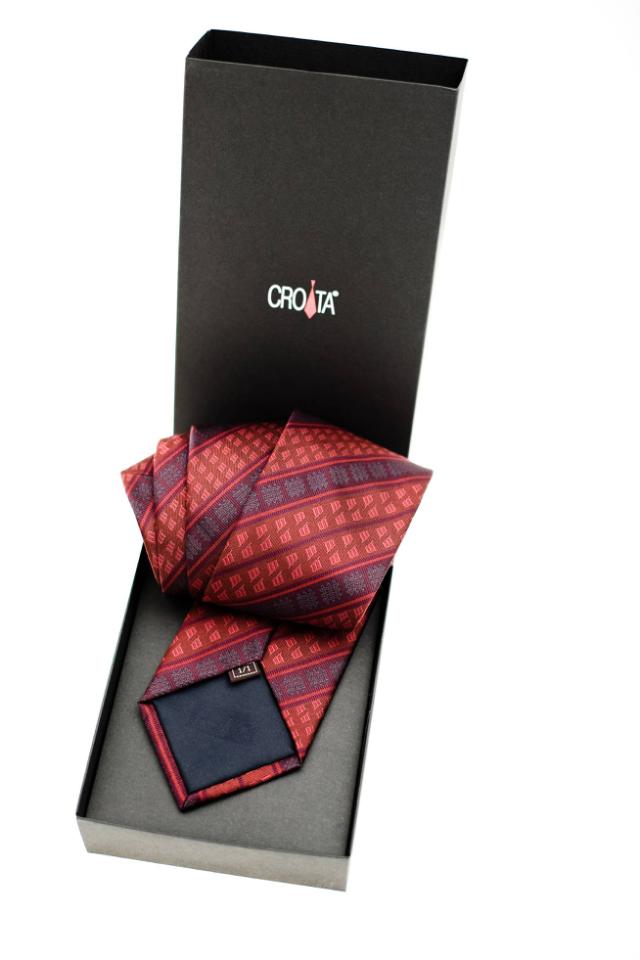
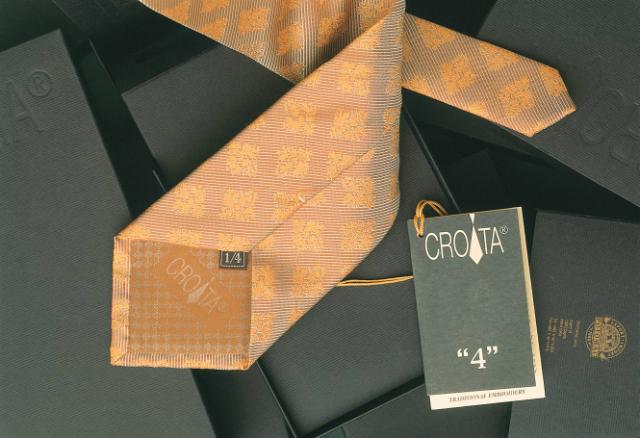
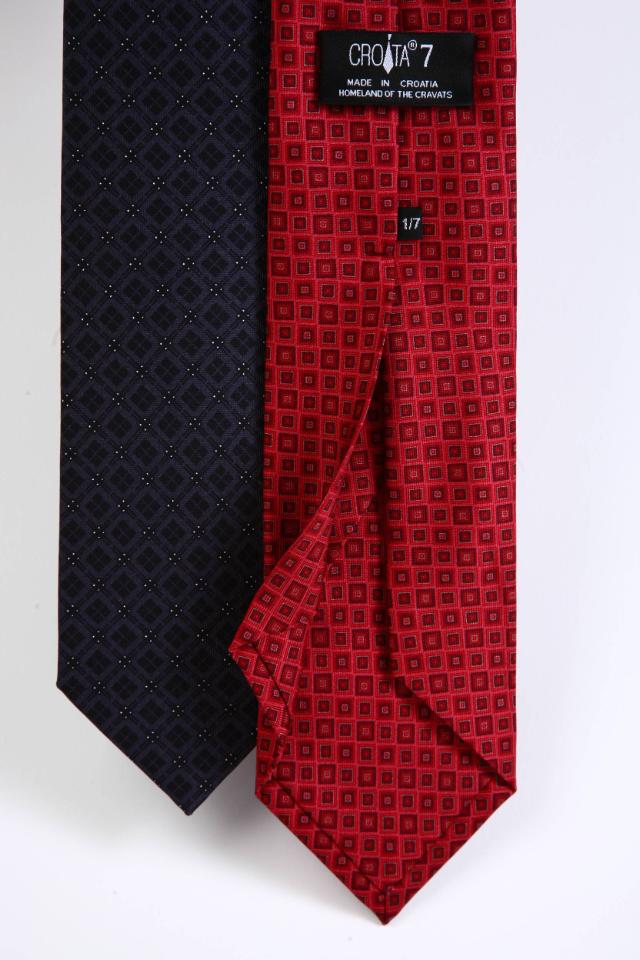
Croata 7 connects two ideas. Seven refers to the number of examples sharing the same pattern and colour, but also to the tie’s particular seven-fold construction. A greater surface of silk is folded so that the interior becomes part of the form itself, and what is most valuable is not visible only upon the surface.
Why not more?
A large quantity is not in itself the opposite of quality. Not every idea, however, belongs to a large series. A particular design may retain its strength precisely because it remains connected with one colour composition, one moment of creation or a very small group of objects. Repeated without a clear boundary, it may gradually lose part of its character.
Small series allow Croata to develop a greater number of different motifs rather than reproduce a few successful ones indefinitely.
This is how the richness of the collection is created. Not through a large quantity of identical objects, but through the breadth of different ideas. The client does not choose only between several colours of the same product. The choice is between textile compositions with their own rhythm, story and predetermined boundary.
Rarity is not always expressed through a number
Not every exceptional Croata object belongs to the same numerical system.
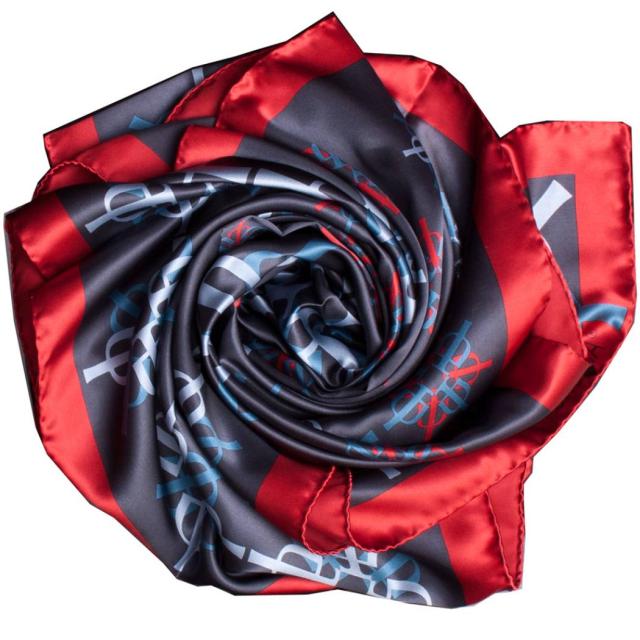
Croata Art transfers an artwork or its approved interpretation into the form of a tie, scarf or shawl. Its rarity emerges from the relationship with the original work, the artist’s authorship, Croata’s textile interpretation and the limited artistic edition.
AuHRum brings silk together with thread containing 24-carat gold. On selected objects, numbering, a certificate and special packaging further confirm rarity, yet the line is not defined only by the number of examples. Its essence lies in the technique through which gold becomes part of the textile structure rather than an ornament added afterwards.
Brijuni, Dubrovnik and Double Face also carry particular constructions, materials and methods of making. They may be created in smaller quantities, yet their distinction should not automatically be reduced to a formally numbered edition. Rarity at Croata therefore has more than one expression. At times it is communicated through a number. Elsewhere, through construction, material, an artistic collaboration or a technique that cannot be repeated without limit.
The number as a promise
Numbering has value only when it can be trusted.
When an object carries the mark 1/1, 2/4 or 7/8, the number cannot be merely decorative. It represents a relationship between the house and the person who has selected the object. It states how many examples were created. It places the individual object within the series. Most importantly, it states that the edition will stop where it was determined to stop.
The motif may later develop in another colour, dimension or form. It may become the starting point for a new collection. Yet a particular relationship between design, colour, product and numbering must remain connected with its completed edition. Otherwise, the number ceases to be a promise. It becomes only a graphic sign.
An object made to be worn
Rarity does not mean that an object should remain closed inside its box. Croata ties, scarves and shawls are created to be worn. Silk assumes its true character only when tied, folded, moved and brought close to the individual. A motif that appeared as a complete composition upon an open surface becomes a sequence of smaller fragments, colours and lines upon the body.
A limited edition does not turn a functional object into a museum piece. It simply changes the relationship with it. The owner knows that the same design and colour will rarely be encountered upon another person. The object remains part of a Croata collection, yet also moves closer to becoming a personal signature. Such rarity does not need to be displayed loudly. It is enough for it to be genuine.
The final example
Every series eventually reaches its final piece. In large production, this may be only the moment before another order is placed.
Within a Croata limited edition, the final piece carries another meaning. It completes the idea. From that moment, the edition is no longer a production possibility. It becomes part of the house archive and of the personal collections of its owners.
A new idea may already be taking form. A new motif, another colour or a different construction may continue the conversation. Yet the previous edition remains where it ended. This is Croata’s measure of rarity. Not producing as little as possible without reason. But recognising the moment in which an idea is complete.