
CROATA LIFE
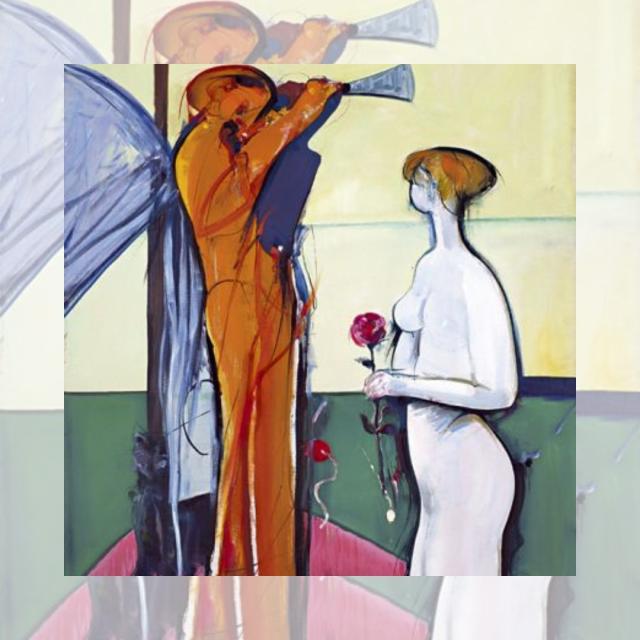
Some works of art refuse to remain confined within a frame. They continue to live - in space, in the gaze, in memory, and sometimes in the touch of silk. One such work is The Trumpeter from Tara, a painting by Zlatko Prica, the Croatian painter and printmaker whose body of work is distinguished by powerful symbolism, expressive colour and a distinctive approach to the human figure. In his world, the human being is not merely a depicted subject, but a sign - a bearer of gesture, silence, rhythm and inner meaning. The painting brings together two figures: a man playing a trumpet and a woman holding a rose. The scene is simple, almost ceremonial. The trumpet may be interpreted as a call, an awakening or the announcement of something yet to come. The rose, meanwhile, carries a quieter message - one of beauty, tenderness and the presence of the moment. Between these two symbols, the space of the painting opens: a space where sound meets silence, the figure meets colour, and art becomes a way of observing the world.
From Canvas to Silk
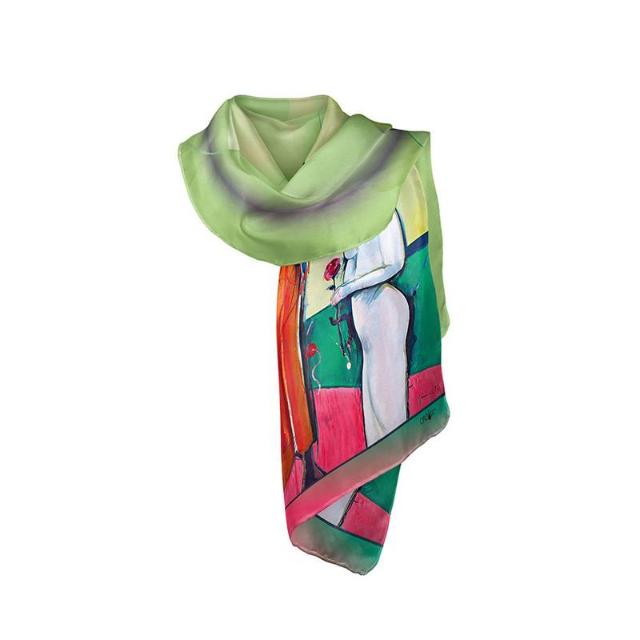
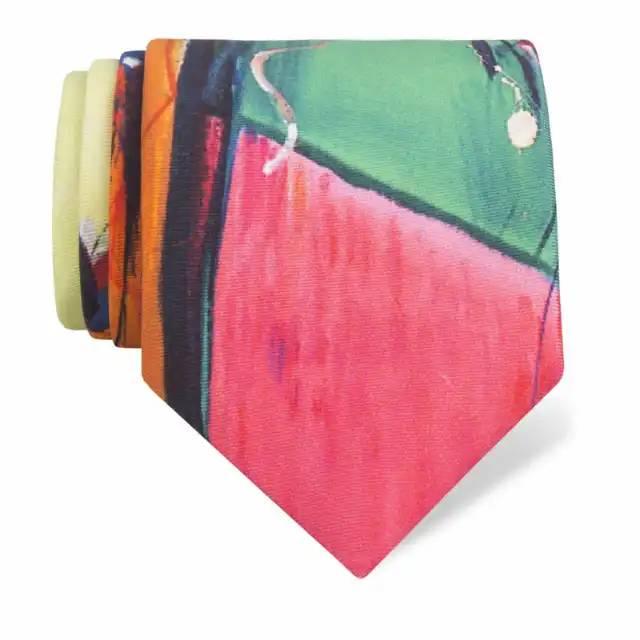
CROATA Art is born precisely from encounters such as these. Not from a desire merely to transfer a work of art onto an object, but to translate its spirit into another medium. When the motif of Prica’s The Trumpeter from Tara appears on silk, it does not lose its original power. On the contrary, it changes the way in which we experience it. The painting is no longer simply placed before us. It moves, folds and catches the light, taking shape in the knot of a tie or the drape of a scarf. Silk becomes a space between art and life. Its lustre does not compete with the painting but lends it a new sense of stillness. Colour on silk is never static; it changes with movement, with the way the piece is worn and with the person wearing it. What was once a composition on canvas becomes a personal symbol in silk.
Art Worn Close to the Body
Within the world of Croata, ties and scarves hold a special symbolism. They are worn close to the face, the neck and the heart. They are not merely functional accessories, but objects of presence—details that speak before words, yet never too loudly. When the motif of an artwork appears on such an object, it acquires a more intimate character. The painting is no longer distant or protected by the walls of a gallery. It enters a personal space and becomes part of one’s posture, movement and everyday elegance. In this sense, The Trumpeter from Tara is more than a decorative motif. It possesses a sense of ceremony, verticality and inner rhythm. It seems to remind us that beauty does not need to be grand to carry meaning. Sometimes, a single colour, a single symbol or one memorable detail is enough.
CROATA Art as a Wearable Fragment of Culture
In a world where clothing is often viewed through the fleeting rhythm of the seasons, CROATA Art chooses a different pace. This is not about trends, but permanence. First, there was the painting. Then came the act of looking at it. Then the decision that its character could continue to live in silk. Only then does a tie or scarf come into being—not as a copy of the artwork, but as a new form of its presence. Within this transition from canvas to silk lies the essence of Croata’s approach: Croatian art does not remain solely within the memory of galleries, but enters everyday life in a discreet, elegant and deeply personal way. To wear CROATA Art is to wear a detail with a provenance. A motif that is never arbitrary. A colour that is more than decoration. An object that speaks of culture without needing to declare it. The Trumpeter from Tara thus becomes more than a painting and more than a fashion accessory. It becomes a quiet encounter between painting, silk and personal style.